
Pallet Guide

1. Standard Pallet Size
In Malaysia, wooden pallets are commonly produced in several standard sizes widely used in warehouses, factories, logistics, and export operations. These standard dimensions exist because they are compatible with forklifts, pallet racking systems, and container loading requirements.
Using standard pallet sizes allows businesses to handle goods more efficiently, optimize storage space, and reduce transportation costs. For this reason, most manufacturers and logistics companies prefer to use these commonly accepted pallet sizes.
While custom pallet sizes can be manufactured based on specific requirements, standard pallet sizes remain the most widely available and practical option in the market.
| Pallet Size | Unit | Common Usage |
|---|---|---|
| 1100 x 1100 mm | Square pallet | Very common in Malaysian warehouses |
| 1200 x 1000 mm | Export pallet | Widely used for shipping and logistics |
| 1200 x 1200 mm | Industrial pallet | Heavy goods and factory storage |
| 1000 x 1000 mm | Compact pallet | Small warehouse storage |
| 800 x 1200 mm | Euro pallet size | International logistics compatibility |
Why Standard Pallet Sizes Are Important
Most pallet sizes are standardized because they need to work efficiently with handling equipment and transportation systems. Using standard pallets provides several advantages:
Compatible with forklift handling
Efficient warehouse storage
Easier container loading
Lower logistics costs
Easier pallet replacement
For many businesses, using standard pallet sizes helps maintain smoother operations across warehouses, factories, and distribution centers
2. Understanding Different Types of Wooden Pallets
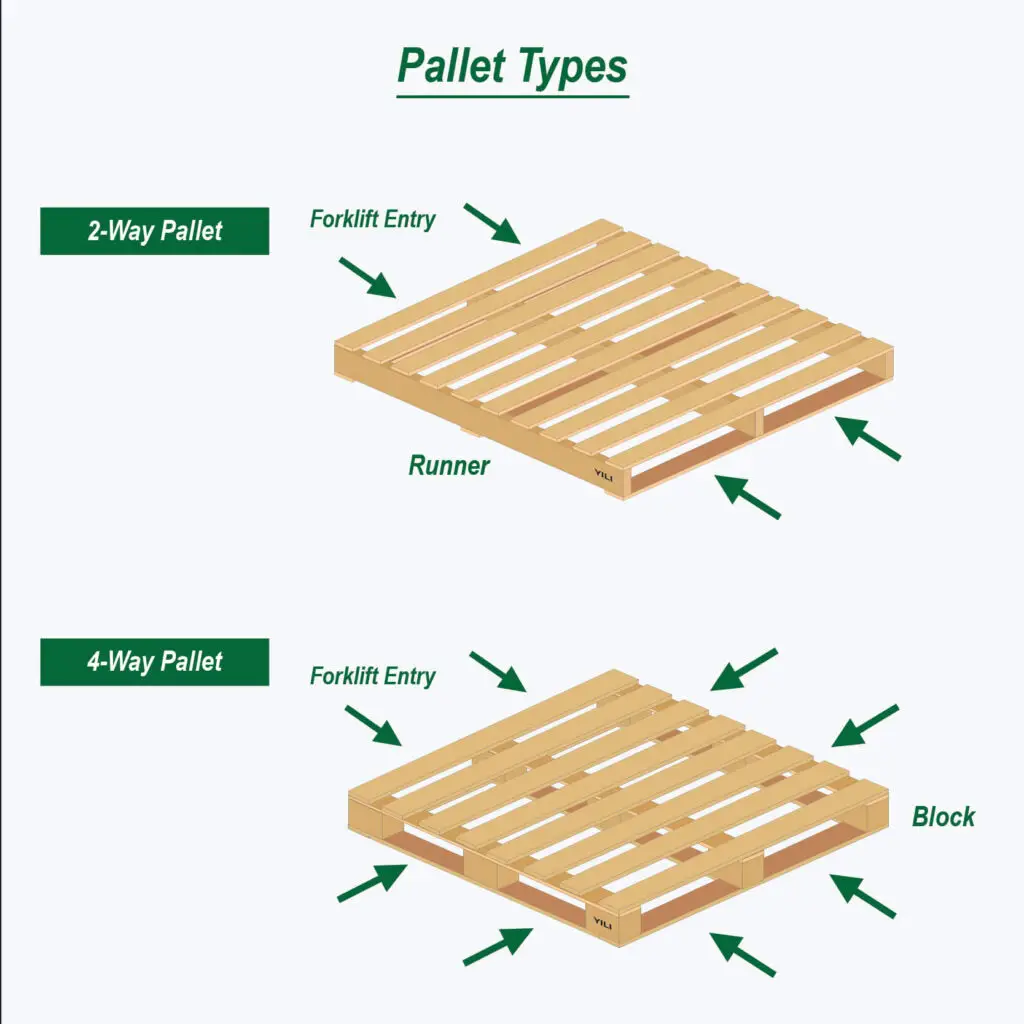
Wooden pallets come in a variety of designs to meet the needs of different industries, handling equipment, and load requirements. The most common are 2-way and 4-way pallets. Choosing the right pallet type can help improve warehouse efficiency, transportation safety, and storage stability.
Below are the most common pallet types used in Malaysia warehouses, factories, and logistics operations.
2-Way entry pallets use long wooden boards called runner to support the top deck boards.
Key Features
Usually 2-way forklift entry
Strong and simple structure
Lower production cost
Common Uses
General warehouse storage
Local transportation
Light to medium load handling
This pallet type is widely used due to its cost efficiency and simple construction.
4-Way entry pallets use wooden blocks instead of long beams, allowing forklifts to enter from all four sides.
Key Features
4-way forklift entry
Higher load capacity
Better stability during stacking
Common Uses
Export shipments
Automated warehouse systems
Heavy industrial goods
Block pallets are commonly preferred when frequent forklift handling is required.
3. Choosing the Right Pallet for Your Load
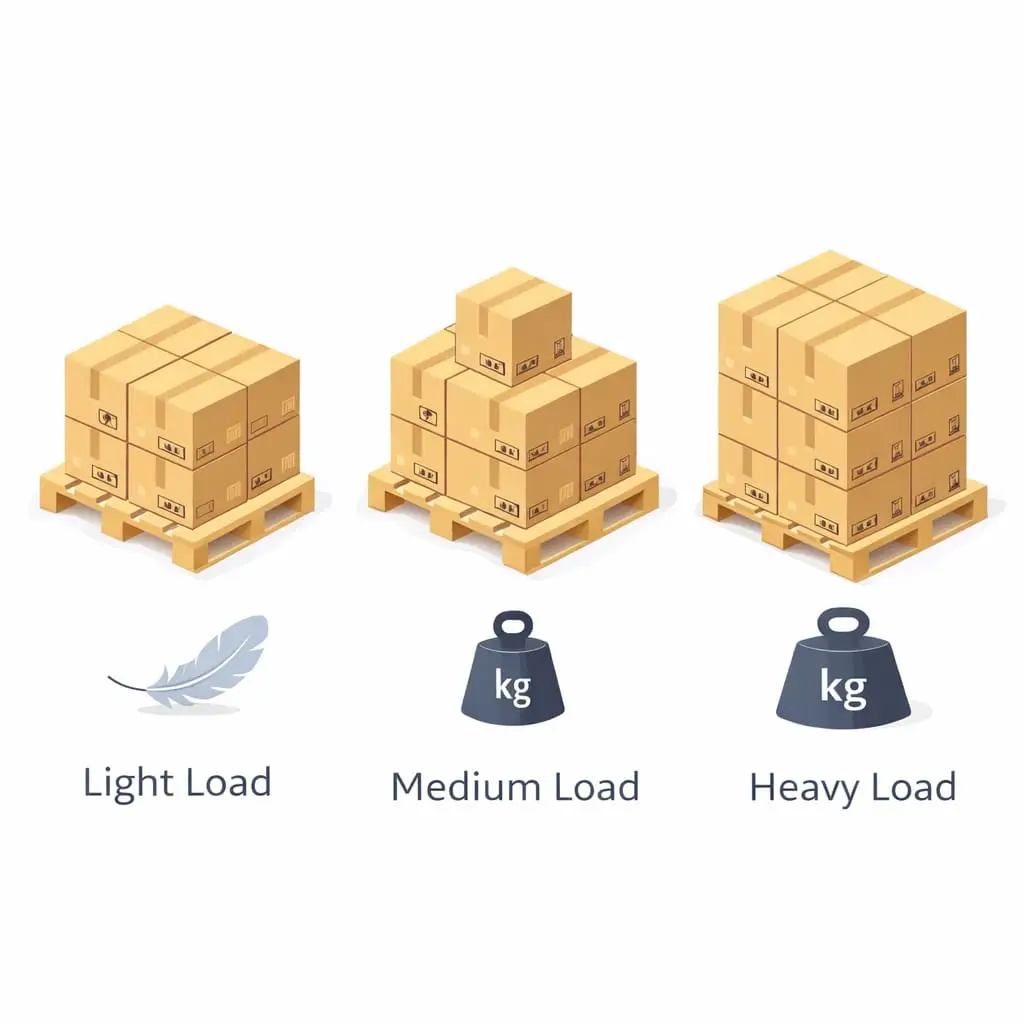
When selecting pallets, businesses should consider:
Weight of goods
Storage method (floor or rack)
Forklift handling requirements
Transportation conditions
Using pallets with the correct load capacity ensures safer logistics operations and reduces product damage during handling and transport.
Factors That Affect Pallet Load Capacity
Several factors determine how much weight a pallet can safely support.
Pallet Structure
Stringer pallet
Block pallet
Double deck pallet
Different structures provide different levels of strength and stability.
Wood Quality
Hardwood pallets generally support heavier loads compared to softwood pallets.
Deck Board Thickness
Thicker boards increase load-bearing capacity.
Weight Distribution
Uneven weight can cause pallet failure even if the total weight is within limits.

4. New vs Recycled Wooden Pallets
Understanding the Difference
Businesses often choose between new wooden pallets and recycled wooden pallets depending on their budget, usage requirements, and product type.
Both options are widely used in warehouses, logistics operations, and manufacturing industries. Understanding the differences helps companies choose the most suitable pallet solution.
Key Differences Between New and Recycled Pallets
| Feature | New Wooden Pallets | Recycled Wooden Pallets |
|---|---|---|
| Material | New timber | Reused pallet wood |
| Appearance | Clean and uniform | May show signs of previous use |
| Price | Higher cost | More affordable |
| Custom sizes | Available | Limited |
| Typical use | Export / production | Warehouse / local logistics |
Both pallet types serve important roles in logistics operations.
Which Pallet Should You Choose?
The right choice depends on several factors:
Budget
Load capacity requirements
Export or domestic use
Warehouse system compatibility
Many businesses use a combination of both pallet types depending on their operational needs.
New wooden pallets are manufactured using fresh timber and newly cut components.
Key Features
Brand new materials
Consistent dimensions
Clean appearance
Custom sizes available
Advantages
Suitable for export packaging
Reliable load capacity
Ideal for industries requiring uniform pallet sizes
Common Uses
Export shipments
Manufacturing production lines
Food and pharmaceutical logistics
Automated warehouse systems
New pallets are often chosen when quality consistency and reliability are critical.
Recycled wooden pallets are used pallets that have been inspected, repaired, and prepared for reuse.
Key Features
Previously used pallets
May contain repaired components
More cost-effective than new pallets
Advantages
Lower cost solution
Environmentally friendly
Suitable for many warehouse applications
Common Uses
Local deliveries
Warehouse storage
Distribution centers
Non-export logistics operations
Recycled pallets are widely used when cost efficiency is the main priority.
5. Custom Pallet Manufacturing
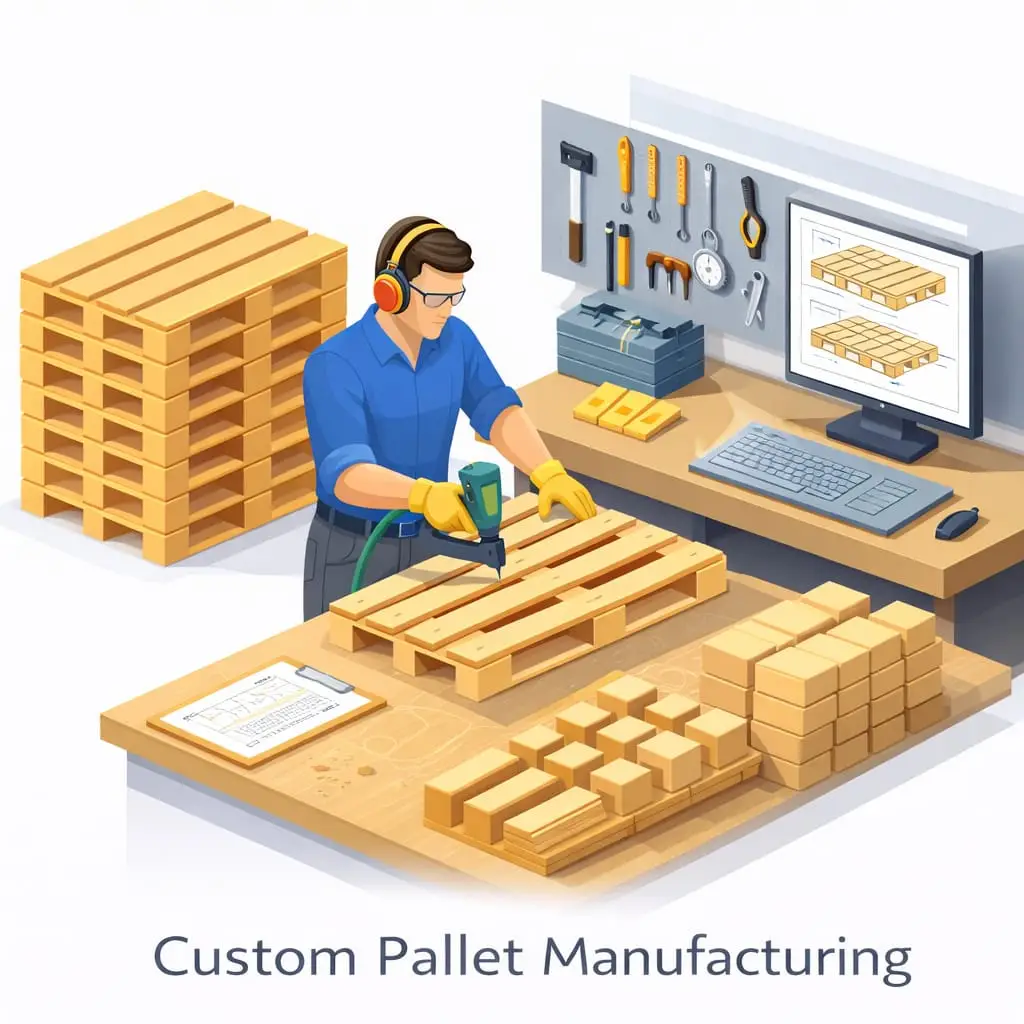
Not all products fit standard pallet sizes. In many industries, businesses require custom wooden pallets designed specifically for their product dimensions, weight, and logistics requirements.
Custom pallet manufacturing allows companies to improve handling efficiency, storage stability, and transportation safety.
Common Reasons for Custom Pallets
Products that are larger or smaller than standard pallet sizes
Heavy machinery or equipment
Export packaging requirements
Warehouse racking compatibility
Improving space efficiency during transportation
With the correct pallet design, companies can reduce product damage and improve logistics efficiency.
Custom Pallet Design Options
Different pallet specifications can be customized based on operational requirements.
Pallet Size
Custom pallets can be produced in various dimensions depending on product size and packaging configuration.
Load Capacity
Pallet structure can be designed according to required weight capacity, including:
Light-duty pallets
Medium-duty pallets
Heavy-duty pallets
Pallet Structure
Different structures may be used depending on handling requirements.
Common options include:
Stringer pallets
Block pallets
Double deck pallets
Wood Material
Pallets may be produced using different timber types depending on availability and strength requirements.
6. Pallet Size for Container Loading
Choosing the Right Pallet Size for Efficient Container Transport
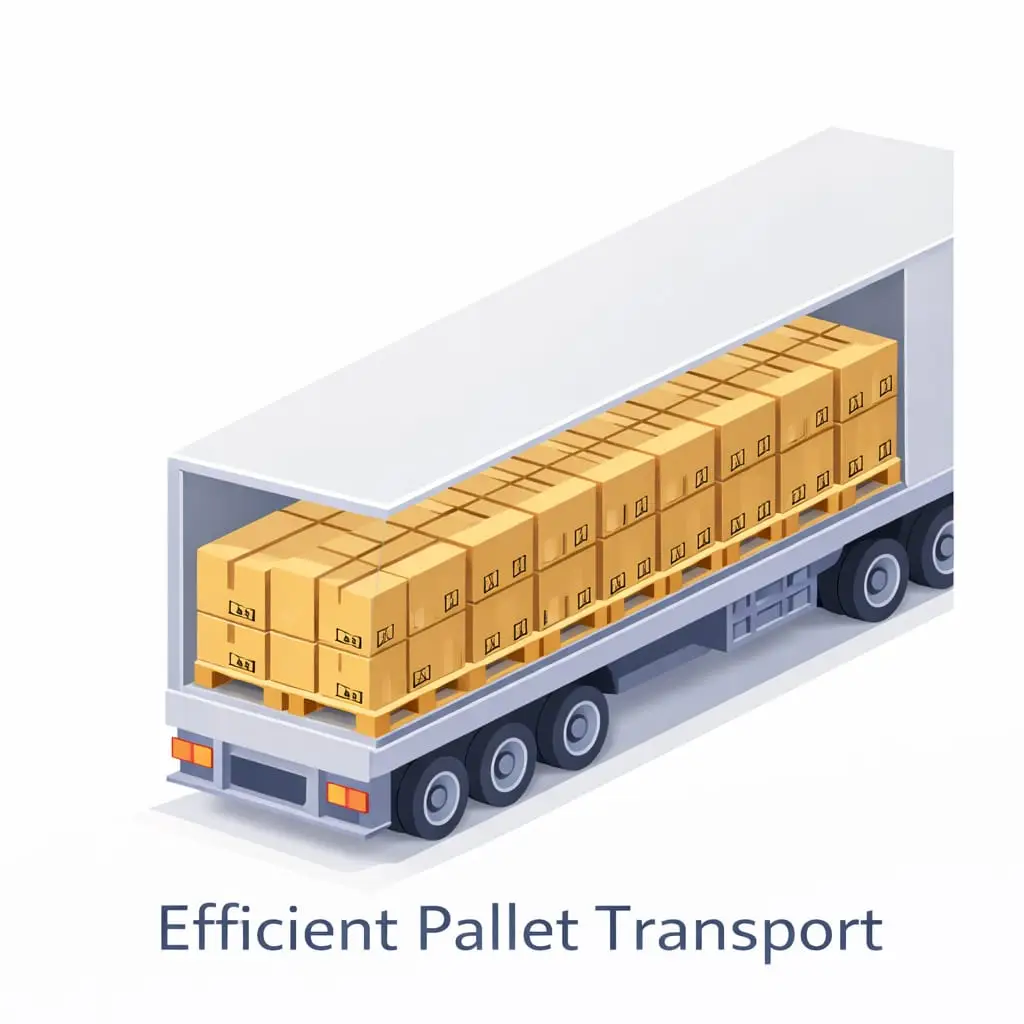
Selecting the correct pallet size is important for maximizing container space and improving transportation efficiency. When pallet dimensions are compatible with container sizes, businesses can load more products while reducing wasted space.
Proper pallet planning helps improve logistics efficiency, cargo stability, and shipping cost control.
The two most common container sizes used in international shipping are:
20-Foot Container
Approximate internal dimensions:
Length: 5.9 m
Width: 2.35 m
Height: 2.39 m
This container is commonly used for heavy cargo shipments.
40-Foot Container
Approximate internal dimensions:
Length: 12.03 m
Width: 2.35 m
Height: 2.39 m
The 40-foot container allows significantly higher cargo volume and is widely used in global logistics.
Different pallet sizes are used depending on the industry and shipping requirements.
1200 x 1000 mm
One of the most commonly used pallet sizes in international logistics.
Advantages:
Efficient container loading
Good compatibility with warehouse racking systems
Suitable for many industries
1100 x 1100 mm
Widely used in Asian logistics and export packaging.
Advantages:
Square pallet improves stacking stability
Often used in manufacturing and export shipments
1200 x 800 mm (Euro Pallet Size)
Common in European logistics systems.
Advantages:
Compatible with many European warehouse systems
Efficient stacking and handling